TONY LEWIS SR.: THE OTHER HALF OF THE KING (AND THE LONG ROAD HOME)
INFAMY - A TRUE CRIME PODCAST
In the history of the drug trade, names usually come in pairs. If the D.C. kingpin Rayful Edmond III was the charismatic face of the operation that took over the capital, Tony Lewis Sr was its backbone.
For decades, the reputation of Tony Lewis in DC was defined by mugshots, court documents, and the shadow of the “Rayful Edmond Era.” He was tied strictly to his crime. He was defined by his crime. However, the narrative has shifted. Today, the story of Tony Lewis from the ‘Dodge City’ era of Washington D.C. is no longer just about the rise of a kingpin; it is about the endurance of a father and the relentless fight of a son.
Recently, the narrative shifted from a life sentence to a story of freedom. After 34 years behind bars, the man who once controlled Hanover Place is finally home. Here is the uncut story of the other half of D.C.’s most notorious empire.
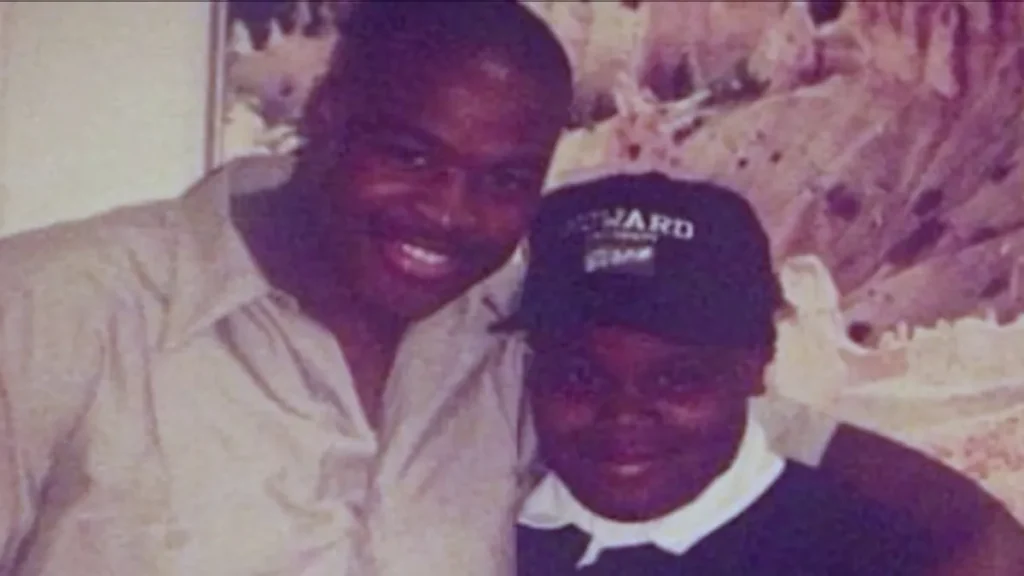
HANOVER PLACE: THE CENTER OF OPERATION
To understand the hierarchy of the late 80s, you have to look at the map. While Rayful held court on Orleans Place, Hanover Place DC was the other beating heart of the organization.
This was the territory of Tony Lewis Sr. Unlike the chaotic violence that would later define the city, the operation run by tony lewis sr and rayful edmond was structured with corporate precision. They introduced crack cocaine to the region on a massive scale, moving units with an efficiency that baffled law enforcement. It wasn’t just about selling drugs; it was about managing a logistics empire that generated millions before the inevitable crash.
However, the flashy lifestyle and the sheer volume of money eventually drew the attention of the federal government. At the age of 26, Tony Lewis Sr. was arrested. He was charged with non-violent drug offenses, but due to the harsh laws of the era, his life as a free man was effectively over.
THE SENTENCE: LIFE WITHOUT PAROLE
The judicial system made an example of him. Under the newly implemented Mandatory Minimums, Tony Lewis Sr. was sentenced to life in prison without the possibility of parole.
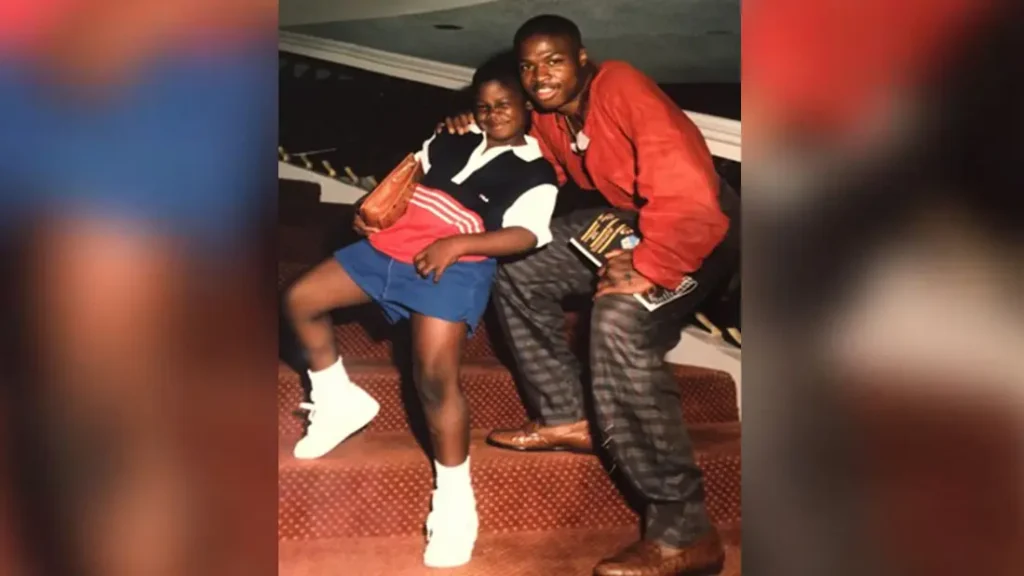
The impact was immediate and devastating. Specifically, he left behind a nine-year-old son, Tony Lewis Jr. For the next three decades, inmate No. 15443-083 became a voice on a telephone line. Despite the physical distance, father and son bonded by speaking on the phone nearly every day. These 15-minute conversations became their lifeline. Tony Sr. wasn’t just passing time; he was parenting from behind glass, imparting wisdom to ensure his son wouldn’t follow his path to Hanover Place.
While Tony Lewis Sr remained in a cell, watching D.C. change from afar, the laws that locked him away remained rigid. He missed everything: graduations, birthdays, and the simple act of being a “Superman” to his child.
THE RISE OF TONY LEWIS JR. & THE MOVEMENT
In the absence of his father, Tony Lewis Jr became a champion for his community. Using the pain of his own experience, he built the “Free Tony Lewis” movement, turning a personal tragedy into a public crusade.
He authored the memoir “Slugg: A Boy’s Life in the Age of Mass Incarceration“, which became a critical tool in humanizing his father’s plight. The movement grew beyond D.C., attracting the attention of heavyweights in the entertainment industry. Rap mogul 50 Cent, along with figures like Tyler Perry and Kenya Barris, expressed interest in their story, acknowledging the unique bond between the incarcerated father and the activist son. They saw the potential for a narrative that wasn’t just about crime, but about the broken system left behind.
THE FIRST STEP ACT: A LEGAL BREAKTHROUGH
The turning point in the legal battle came with the passage of the First Step Act in 2018. This legislation, signed during the Trump administration, was designed to correct the harsh sentencing disparities of the past—specifically the draconian laws that treated crack cocaine far more severely than powder cocaine. Tony Lewis Jr. had spent years advocating for this exact reform, working alongside organizations like Cut 50 to help shape the bill.
Crucially, the act addressed the infamous “100-to-1” ratio, which treated one gram of crack as the equivalent of 100 grams of powder. The new law dropped this disparity to 18-to-1 and, most importantly, included a clause making it retroactive. Attorney Brittany K. Barnett used this legal avenue to argue that Tony Lewis Sr. had already paid his debt. Under these new guidelines, a judge finally reduced his sentence to time served, acknowledging that the 34 years he had already spent in prison were more than enough.
THE SEATBACK AND THE RELEASE
The road to freedom was not a straight line. In November 2021, the family suffered a crushing blow. Despite their efforts, a judge initially denied the motion for compassionate release. Tony Lewis Jr. had to make the hardest call of his life, telling his father, “He denied the motion.”
But they didn’t give up. Thanks to the passage of the First Step Act and relentless legal pressure, the tide finally turned. Finally, in 2023, the news broke: tony lewis sr released.
The scene of his release was emotional. Walking out of the facility after 34 years, he was no longer the young kingpin of 1989. When asked about his future, Tony Lewis Sr. was clear. He didn’t just want to be free; he wanted to be useful. “I’m in the business now of trying to save lives,” he stated. He expressed a desire to work as a consultant on film projects about his life—not to glorify the game, but to “take the cape off” and show the youth the harsh reality of the streets.
Today, the question of the tony lewis sr release date is no longer a search query on Google: it is a celebrated anniversary. His return marks the end of one era in D.C. history and the beginning of another—one defined not by crime, but by the power of second chances.
THE LEGACY OF DODGE CITY
Eventually, the violence burned itself out. Aggressive federal intervention, strictly enforced Sentencing Guidelines, and the eventual stabilization of the drug market brought the numbers down.
Today, the scars of that era remain. While recent reports from 2024 and 2025 suggest a disturbing rise in crime rates once again, nothing compares to the absolute anarchy of 1991. The story of the Washington DC murder capital era serves as a grim warning of what happens when a city loses both its moral leadership and social order simultaneously.
The legend of “Dodge City” lives on, not just in statistics, but in the history of the men who survived it—and the hundreds who didn’t.