WHO IS LORENZO "FAT CAT" NICHOLS? THE UNCUT TRUTH BEHINS THE QUEEN KINGPIN
INFAMY - A TRUE CRIME PODCAST
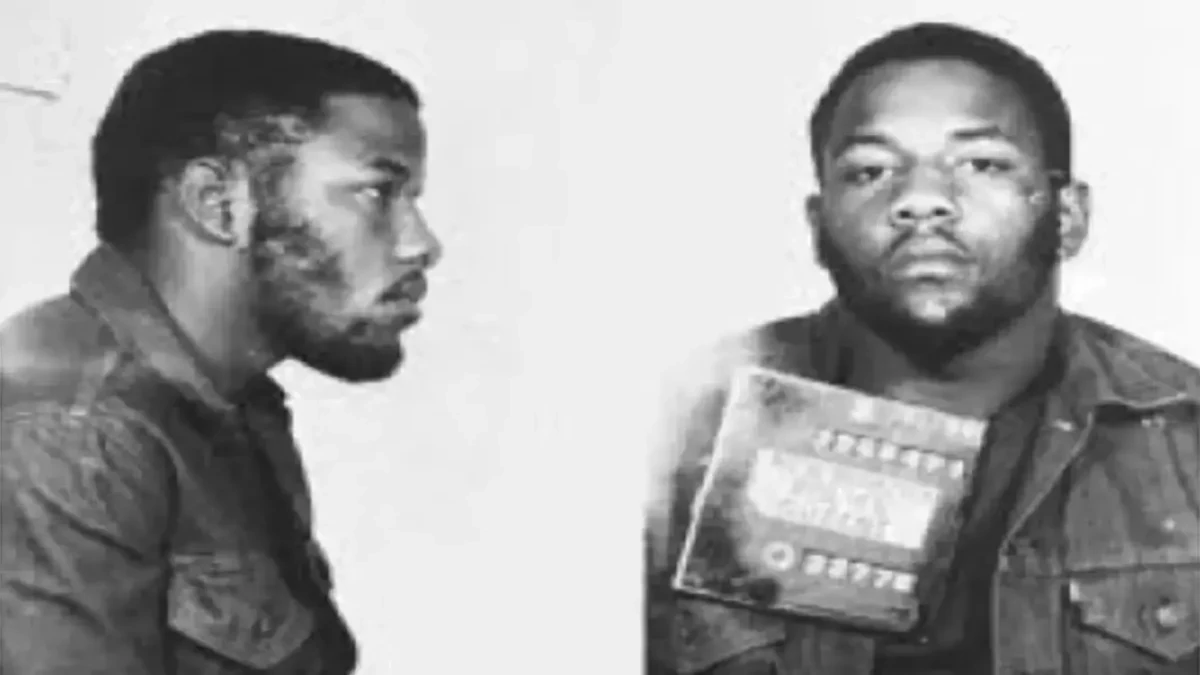
In the lore of New York City crime, few names ring as loudly as Lorenzo “Fat Cat” Nichols. To the mainstream media, he is the man responsible for the chaos of the 1980s. To the federal government, he was a target so high-value that his prosecution changed drug laws forever.
But who was he really?
While Wikipedia lists his crimes, it misses the man who ran South Jamaica with the precision of a CEO, much like Frank Lucas did in Harlem a decade prior. In Season 2 of the Infamy Podcast, narrator and producer Brian Valmond takes listeners into the heart of the Fat Cat era. Based on extensive research and real events , this audio-drama peels back the layers of the man who went from a bullied kid with a heavy southern accent to a figure earning an estimated $100 million.
IS LORENZO "FAT CAT" NICHOLS STILL IN JAIL (2026 UPDATE)
This is the question everyone asks. In reality, the confusion stems from a complex legal battle. While news outlets reported his release from federal prison, Nichols is not a free man.
After serving 34 years in state and federal prison , he was released from the Clinton Correctional Facility. Instead, rather than walking free, he was transferred to Florida’s custody to serve 10 years of additional federal time. Currently, Lorenzo Nichols remains incarcerated, serving the final chapter of a sentence that has spanned decades.
THE "ROUND TABLE": NOT JUST A GANG CORPORATION
Contrary to the chaotic depictions in films, the South Jamaica drug trade under Nichols was a structured enterprise. It wasn’t just Fat Cat running the show alone; he operated within a coalition known as the Round Table.
This group included heavyweights like Kenneth “Supreme” Griffin, his nephew Gerald “Prince” Miller, the Corley Brothers, the Furtado Brothers, and Tommy “Montana” Makins. They met to discuss concerns among crews and find solutions, operating under the motto: “Less issues, more money”.
THE BUSINESS OF THE BLOCK
What separated Fat Cat from the average street dealer was his business acumen. However, upon returning to the streets in 1980, he saw that the Queens he knew had changed. He gathered his crew and implemented new strategies.
Specifically, the organization focused on high-volume sales. As detailed in the podcast, the plan involved taking $450 bags of product and cutting them down to $5 bags. This strategy was designed to generate at least a $1,500 profit for every unit bought. By 1985, the organization had solidified its control over South Jamaica.
THE TURNING POINT: BIG MAC'S DELI RAID (1985)
If there is one date that marks the beginning of the end, it is July 29, 1985. The location: Big Mac’s Deli on 150th Street and 107th Avenue. To the public, it was a store; to the neighborhood, it was known as the “Game Room”.
At that moment, inside the back office, Fat Cat was seated at a desk with a birthday card that read “World’s Greatest Daddy”. With him were his trusted lieutenants, the future film producer Luc “Spoon” Stephen and Chris “Jughead” Williams.
Sergeant McGinnis and Detective Edward Sullivan raided the room. Nichols attempted to stand, but McGinnis ordered him to freeze; Nichols had been sitting on two loaded pistols concealed under a cloth. That moment led to the arrest of the leadership and set off a chain of events that would crumble the empire. This fallout coincided with the national rise of the crack trade, a wave that also defined the career of the West Coast’s Freeway Rick Ross.
THE LEGACY: PAPPY MASON AND THE BYRNE ASSASSINATION
The fall of the Fat Cat empire was accelerated by violence that broke the street code. While Nichols was incarcerated, his former security chief, Howard “Pappy” Mason, took actions that brought unprecedented heat to Queens.
Following a disrespect from a police officer, Pappy Mason ordered a hit from prison. On February 26, 1988, rookie police officer Edward Byrne was assassinated while sitting in his patrol car.
The murder sent shockwaves through the city. Presidential candidate George H.W. Bush even carried Officer Byrne’s badge during his campaign speeches. Nichols, watching his empire burn from behind bars, reportedly called the act “The stupidest shit in the whole fucking world”.
WHY YOU NEED TO HEAR THE FULL STORY
Reading about Lorenzo Nichols on Wikipedia gives you the dates. Listening to Infamy gives you the reality. Narrated by Brian Valmond , this season explores the human cost of the drug game, from the tragic murder of Nichols’ girlfriend Myesha to the firebombing of his mother’s home.
Listen to the Episode on Spotify
Once you understand the Queens organization, discover the chaotic story of Harlem’s most notorious figure in our latest feature: who is Alpo Martinez?